

Orthodontic treatment has evolved significantly over the last two decades, offering patients more choices than ever before. According to the American Association of Orthodontists, approximately 1.5 million new patients begin treatment each year in the United States alone. This surge in demand reflects a growing awareness of oral health benefits beyond aesthetics. Choosing between clear aligners and fixed appliances is a critical decision that impacts your daily routine, treatment duration, and overall comfort. At Mindful Dentistry Boulder, we believe in empowering patients with clear, evidence-based information to make the best choice for their unique smile goals.
Aesthetics and Discretion
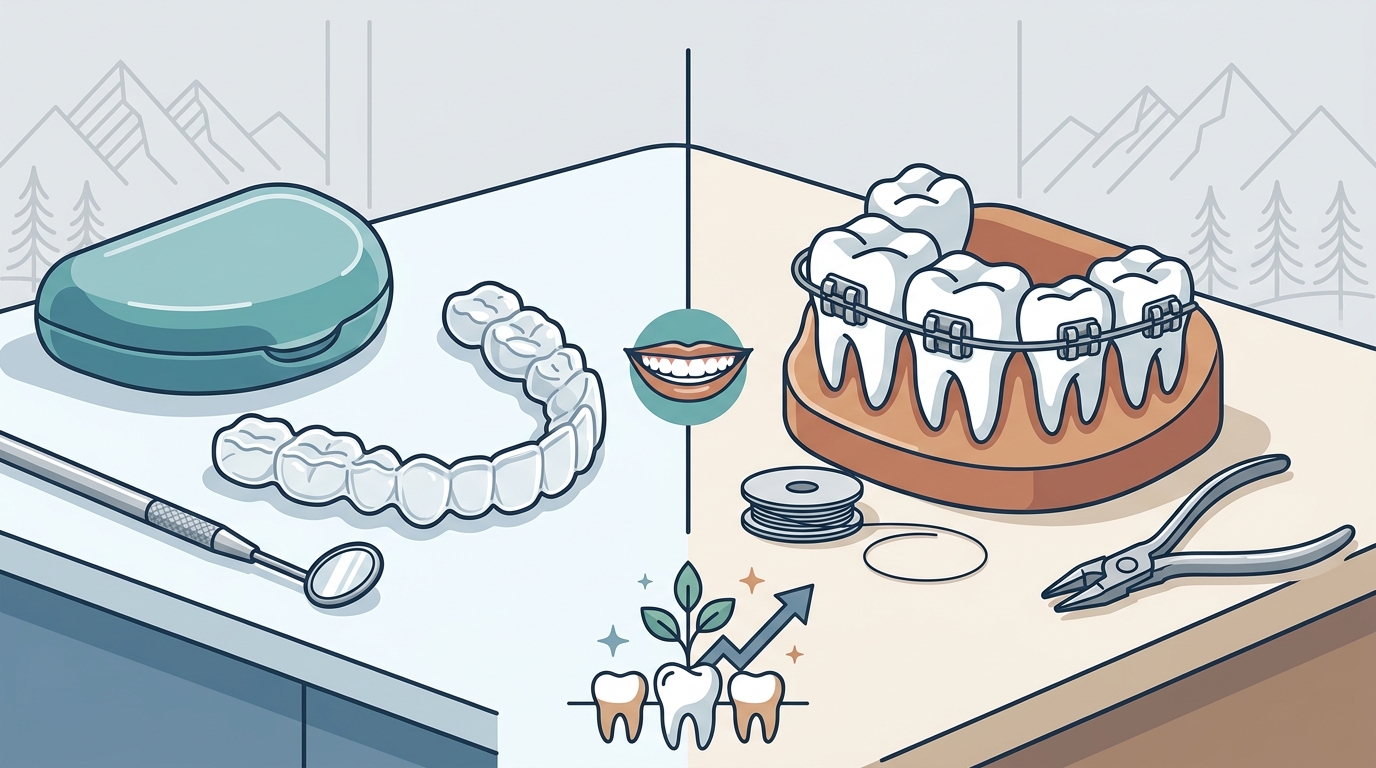
The most immediate difference between these two treatment options is visibility. Invisalign aligners are crafted from a clear, medical-grade thermoplastic material. This design allows them to blend seamlessly with your natural tooth color. For many adults and teenagers, this discretion is a primary factor in choosing this path. It allows individuals to undergo treatment without the noticeable metal brackets and wires associated with traditional braces.
Traditional braces, on the other hand, are highly visible. They consist of metal brackets bonded to the front of each tooth, connected by a steel archwire. While modern braces have become smaller and more comfortable than their predecessors, they remain a prominent feature of your smile. Some patients prefer the aesthetic of braces, viewing them as a badge of commitment to their orthodontic journey. However, for those seeking a low-profile correction, clear aligners offer a distinct advantage.
At Mindful Dentistry Boulder, we understand that confidence is key to oral health. We guide patients through this aesthetic decision by showing them digital simulations of their potential results. This visual preview helps patients understand how their smile will transform, regardless of the method chosen. You can learn more about our Invisalign services to see how clear aligners might fit your lifestyle.
Comfort and Adjustment Period
Comfort is a subjective experience, but there are objective differences in how each system interacts with your mouth. Traditional braces can cause irritation to the cheeks and lips, especially during the first few weeks. The brackets and wires may rub against soft tissues, leading to sores that require orthodontic wax for relief. As the teeth move, the pressure from the wires can cause significant soreness after each adjustment appointment.
Invisalign aligners are smooth and custom-fitted. They do not have sharp edges that can irritate the gums or cheeks. However, the pressure exerted by the aligners to move teeth can cause a feeling of tightness or mild discomfort. This sensation is typically most pronounced during the first few days of wearing a new set of aligners. Most patients adapt quickly, finding the overall experience more comfortable than the persistent irritation of fixed braces.
Orthodontic pain management is a key part of our patient care protocol. We provide detailed instructions on how to manage any initial discomfort. For those concerned about pain, we often recommend starting with a comprehensive orthodontic evaluation to discuss pain management strategies specific to your sensitivity levels.
Dietary Flexibility and Oral Hygiene
One of the most significant practical advantages of clear aligners is dietary freedom. Because the trays are removable, you can eat whatever you want. There are no restrictions on hard, sticky, or chewy foods that can damage braces or get stuck in wires. You simply remove the aligners before eating and brush your teeth before reinserting them. This flexibility makes maintaining a balanced diet easier during treatment.
Traditional braces require strict dietary modifications. Patients must avoid hard foods like nuts and hard candy, which can break brackets. Sticky foods like caramel and gum can dislodge wires or become trapped, leading to decay. This constant vigilance can be frustrating, especially for children and teenagers who may struggle with these restrictions.
Oral hygiene is also easier with removable aligners. You can brush and floss normally, just as you would without any appliances. With braces, cleaning around brackets and under wires requires special tools like interdental brushes or water flossers. Failure to clean thoroughly can lead to plaque buildup and permanent white spots on the teeth after the braces are removed. Our team emphasizes the importance of professional hygiene maintenance to ensure your teeth remain healthy throughout any orthodontic process.
Treatment Duration and Compliance
Treatment time varies significantly based on the complexity of the case and the patient's compliance. Invisalign requires patients to wear the aligners for 20 to 22 hours per day. If you fail to wear them as directed, the treatment will take longer or may not achieve the desired results. This reliance on patient discipline is a critical factor in success.
Traditional braces are fixed to the teeth, meaning they work 24 hours a day. You do not need to remember to put them in or take them out. This constant force can sometimes lead to faster treatment times for certain types of tooth movements. However, the need for regular adjustment appointments every four to six weeks can be a logistical burden.
Research indicates that patient compliance is the strongest predictor of Invisalign success. A study published in the Journal of Clinical Orthodontics highlights that consistent wear time is essential for predictable outcomes. We monitor compliance closely during your visits to ensure you stay on track. You can read more about orthodontic compliance tips on our blog to maximize your treatment efficiency.
Complexity and Effectiveness
For decades, traditional braces were the only option for complex orthodontic cases. They offer precise control over tooth movement in all three dimensions. Severe crowding, large gaps, and complex bite issues like overbites or underbites are often treated more effectively with fixed appliances.
Advancements in Invisalign technology have expanded its capabilities significantly. The system can now treat a wide range of cases, including moderate crowding and spacing. For many patients, the results are comparable to braces. However, for highly complex movements, your orthodontist may recommend braces or a combination of both methods. It is crucial to have an expert assessment to determine the best approach for your specific anatomy.
At Mindful Dentistry Boulder, we utilize advanced digital scanning technology to plan your treatment with precision. This allows us to predict outcomes accurately and choose the most effective method for your needs. We invite you to explore our digital scanning services to see how technology enhances our diagnostic accuracy.
Cost and Insurance Considerations
Cost is a major factor for most patients. Generally, traditional braces are less expensive than Invisalign. The average cost for braces can range from $3,000 to $7,000, depending on the complexity and duration. Invisalign treatment typically ranges from $3,000 to $8,000. The higher cost of aligners reflects the technology, custom manufacturing, and frequent monitoring required.
Many dental insurance plans cover a portion of orthodontic treatment. Some plans offer a lifetime maximum for orthodontics, which may apply to either option. It is important to check your specific policy details. We can help you navigate your insurance benefits to minimize out-of-pocket costs. Contact our office to discuss insurance and billing options for your treatment plan.
Key Takeaways
- Aesthetic Preference: Invisalign offers near-invisibility, while braces are highly visible but effective for complex cases.
- Dietary Freedom: Removable aligners allow unrestricted eating, whereas braces require avoiding hard and sticky foods.
- Oral Hygiene: Aligners permit normal brushing and flossing, while braces require specialized cleaning tools.
- Compliance: Invisalign success depends on wearing trays 22 hours daily; braces work continuously without patient effort.
- Complexity: Traditional braces remain the gold standard for severe malocclusions and complex tooth movements.
- Cost: Braces are generally less expensive, but insurance coverage can vary significantly between the two options.
- Professional Guidance: An expert evaluation is essential to determine the most effective treatment for your specific dental anatomy.
Frequently Asked Questions
Which is better for severe crowding?
Traditional braces are often preferred for severe crowding because they provide greater control over tooth movement. However, Invisalign has improved and can treat many moderate cases effectively.
How long does Invisalign take compared to braces?
Invisalign treatment typically lasts 12 to 18 months, while braces may take 18 to 24 months. However, this varies greatly depending on the individual case complexity and patient compliance.
Can I eat with Invisalign?
You must remove your aligners to eat and drink anything other than water. This prevents staining and damage to the trays. You should brush your teeth before reinserting them.
Are braces painful?
Braces can cause soreness after adjustments and may irritate the cheeks. Orthodontic wax can help manage irritation. Invisalign causes pressure-related soreness when changing trays, which is usually mild.
Does insurance cover both options?
Many dental insurance plans cover orthodontics for children and sometimes adults. Coverage limits and percentages vary by plan. We recommend checking with your provider or our billing team for specifics.
Is Invisalign only for adults?
No, Invisalign offers specific programs for teenagers, including compliance indicators and space for erupting permanent teeth. It is a popular choice for teens seeking discretion.
How do I maintain oral hygiene with braces?
You need to brush after every meal and use interdental brushes or a water flosser to clean around brackets and wires. Regular professional cleanings are also essential.
Schedule Your Consultation
Choosing the right orthodontic treatment is a personal decision that requires professional guidance. At Mindful Dentistry Boulder, we are dedicated to providing compassionate, high-quality care tailored to your unique needs. Whether you are considering clear aligners or traditional braces, we are here to support you every step of the way. Contact us today to schedule your consultation and take the first step toward a healthier, more confident smile.