

Laser Dentistry Approach
Strengths of Laser Treatment
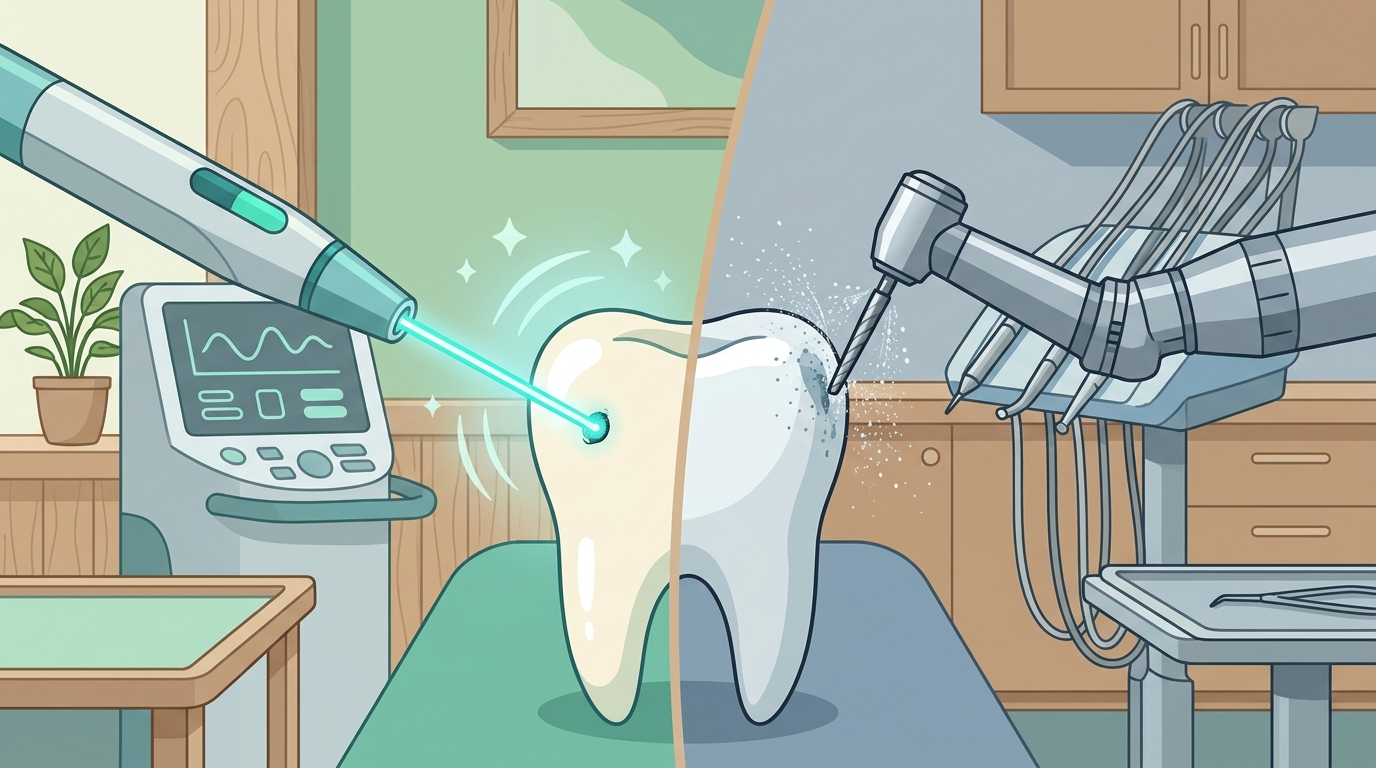
Laser dentistry is particularly effective for removing decay in the early stages of cavity formation. It can also be used for gum contouring and treating periodontal disease by removing infected tissue without the need for sutures. Patients often report less post-operative sensitivity and faster healing times. The absence of a drill makes this approach ideal for those with significant dental phobia.
Limits and Considerations
While lasers are excellent for soft tissue and early decay, they are not always suitable for deep cavities or large restorations. The process can be slower than drilling for extensive work. Additionally, not all dental materials bond equally well with laser-prepared surfaces, so the dentist must carefully evaluate the case. Cost is generally higher than traditional drilling, and insurance coverage may vary.
Traditional Drilling Approach
Traditional drilling is the standard method for preparing teeth for fillings and crowns. It involves using a high-speed handpiece to remove decayed or damaged tooth structure. This technique is well-established, widely available, and highly effective for a broad range of dental procedures. Dentists have decades of experience with this method, ensuring reliable outcomes for complex cases.
Strengths of Traditional Drilling
Drilling is fast and efficient, especially for large cavities or when multiple teeth need treatment. It is generally more affordable than laser options and is widely covered by dental insurance plans. The technique allows for precise control over the depth and shape of the preparation, which is crucial for ensuring the longevity of the restoration. For many patients, the speed and cost-effectiveness make this the preferred choice.
Limits and Considerations
The primary drawback of traditional drilling is the sensory experience. The noise, vibration, and pressure can be uncomfortable and anxiety-inducing. Local anesthesia is typically required to numb the area, which adds to the procedure time. Some patients experience post-operative sensitivity that lasts longer than with laser treatments. For those with a strong fear of dental procedures, this method may require additional sedation options.
Comparison Table
| Criteria | Laser Dentistry | Traditional Drilling |
|---|---|---|
| Invasiveness | Minimally invasive, preserves more tooth structure | More invasive, removes more tooth structure |
| Comfort Level | Lower anxiety, less vibration and noise | Higher anxiety, requires anesthesia for most cases |
| Speed | Slower for complex cases | Faster for large restorations |
| Cost | Generally higher | Generally lower, better insurance coverage |
| Healing Time | Faster, less post-operative sensitivity | Slower, potential for longer sensitivity |
| Best For | Early decay, gum treatment, anxious patients | Deep cavities, large restorations, cost-conscious patients |
Choose Laser If
Choose Traditional If
Choose traditional drilling if you have deep cavities or require large restorations like crowns or bridges. This method is faster and more cost-effective for extensive dental work. If you are comfortable with the dental experience and prioritize insurance coverage and speed, traditional drilling is a reliable option. It remains the gold standard for many complex restorative procedures.
Frequently Asked Questions
Is laser dentistry painful?
Laser dentistry is generally less painful than traditional drilling. Many patients do not require local anesthesia for minor procedures, though it may be used for comfort. The absence of vibration and noise significantly reduces discomfort and anxiety.
Can lasers replace all drilling?
No, lasers cannot replace all drilling. They are best suited for early decay and soft tissue treatments. For deep cavities or large restorations, traditional drilling is often necessary to ensure proper preparation and restoration longevity.
Is laser dentistry more expensive?
Yes, laser dentistry is typically more expensive than traditional drilling. The specialized equipment and slower process contribute to higher costs. Insurance coverage for laser treatments may be limited, so it is important to check with your provider beforehand.
How long does laser treatment take?
Laser treatment time varies depending on the procedure. For minor decay removal, it may take similar time to drilling. For gum treatments, lasers can be faster and more precise. Complex cases may take longer than traditional methods.
Is laser dentistry safe?
Yes, laser dentistry is safe when performed by a trained and experienced dentist. The technology is well-established and has a strong safety record. At Mindful Dentistry, we prioritize patient safety and use the latest technology to ensure optimal outcomes.
Can I switch between methods during treatment?
In some cases, a dentist may use a combination of laser and traditional drilling. For example, a laser might be used to remove early decay, followed by drilling for deeper preparation. This hybrid approach allows for the benefits of both methods. Learn more: mindfuldentistryboulder com.