
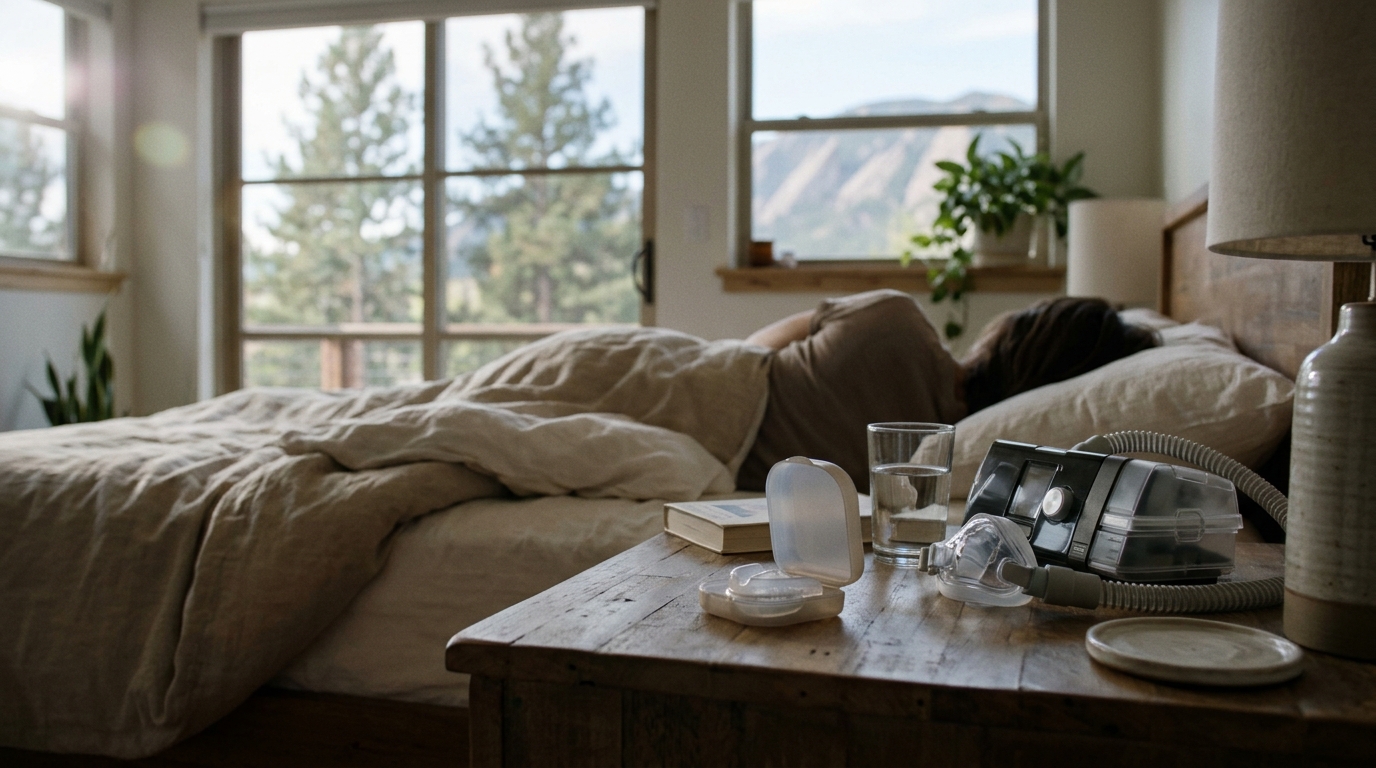
Choosing between oral appliance therapy and CPAP depends on your apnea severity, comfort tolerance, and lifestyle. For mild to moderate obstructive sleep apnea, oral appliances often provide a more comfortable and portable alternative. For severe cases, CPAP remains the clinical gold standard. At Mindful Dentistry in Boulder, we help patients evaluate which approach aligns with their health goals and daily routines.
Understanding the Two Main Options
Obstructive sleep apnea (OSA) is a condition where the airway collapses during sleep, causing breathing pauses. The two primary treatments are Continuous Positive Airway Pressure (CPAP) and oral appliance therapy. CPAP is a machine that delivers pressurized air through a mask to keep the airway open. Oral appliance therapy is a custom-fitted dental device that advances the jaw or tongue to maintain airway patency. Understanding the mechanics of each is the first step in choosing the right fit for your needs.
Oral Appliance Therapy: Strengths and Limits
Oral appliances are custom-made by dentists based on impressions of your teeth and jaw. They are lightweight, quiet, and highly portable, making them ideal for travelers. The primary strength is comfort; many patients find the device far less intrusive than a mask. However, the efficacy is generally lower than CPAP for severe apnea. These devices work best for mild to moderate cases. They require regular dental adjustments to ensure the jaw position remains optimal and to prevent dental side effects. At Mindful Dentistry, we focus on holistic, gentle approaches to ensure these devices do not cause jaw strain or tooth wear.
CPAP Therapy: Strengths and Limits
CPAP therapy is the most effective treatment for severe obstructive sleep apnea. It is highly reliable and has a strong evidence base for reducing cardiovascular risks. The main limitation is compliance. Many patients struggle with mask fit, noise, and the sensation of pressurized air. The equipment is bulky and requires a power source, which can be inconvenient for travel. While effective, the barrier to consistent nightly use is significant. If you have severe apnea, CPAP is often the only option that provides sufficient therapeutic benefit.
Comparison Table: Oral Appliances vs CPAP
| Criteria | Oral Appliance Therapy | CPAP Therapy |
|---|---|---|
| Best For | Mild to Moderate OSA | Mild to Severe OSA |
| Comfort Level | High (No mask) | Variable (Mask dependent) |
| Portability | Excellent | Poor (Requires power) |
| Efficacy | Moderate | High |
| Cost Structure | One-time device + adjustments | Equipment + ongoing supplies |
| Side Effects | Jaw pain, tooth wear | Dry mouth, skin irritation |
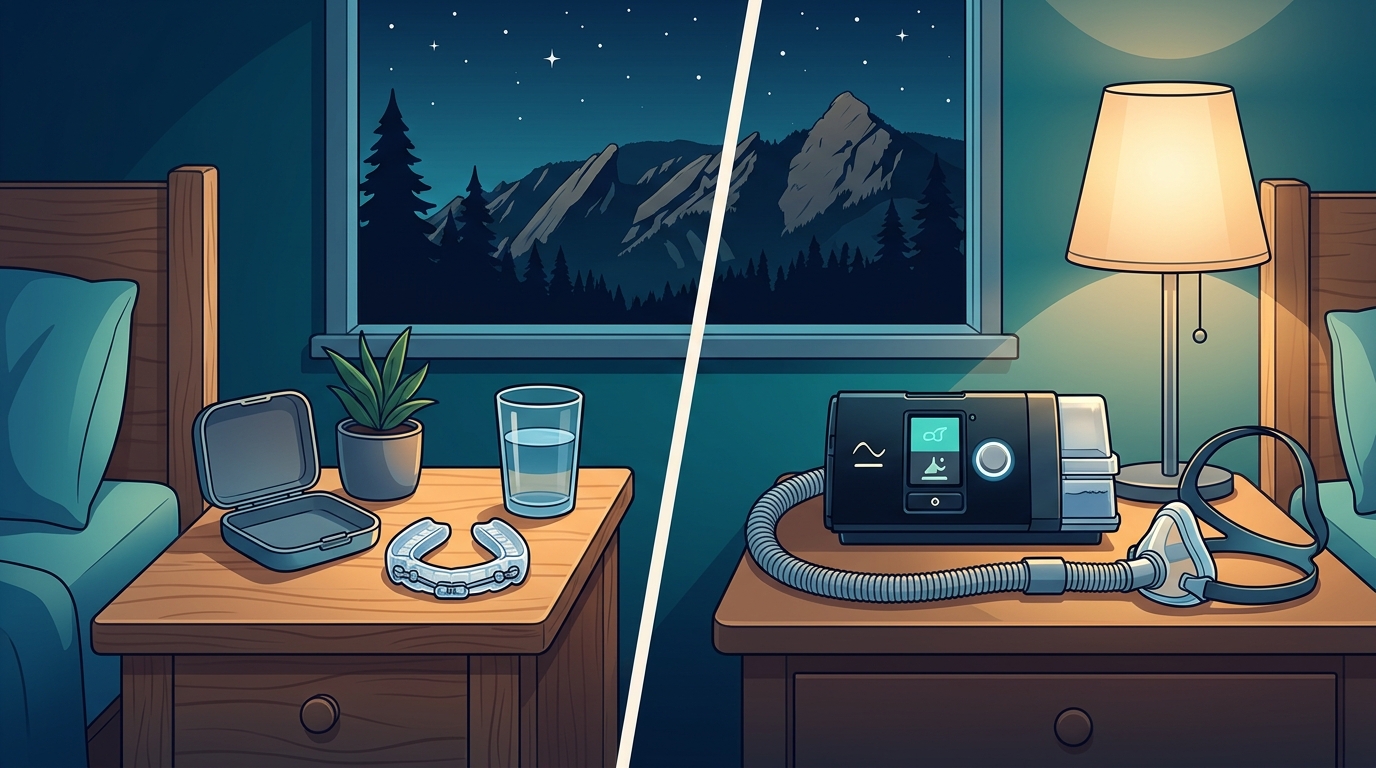
Choosing the Right Option for Your Lifestyle
Your daily routine and travel habits play a major role in treatment success. If you travel frequently, the portability of an oral appliance is a significant advantage. You can pack it in a small case and use it anywhere without needing an outlet. If you stay home most nights, the power requirement of a CPAP machine is less of a barrier. Consider your sleeping position and whether you share a bed. Oral appliances are silent, which may benefit partners. CPAP machines have quiet modes, but the mask can still be a source of disturbance for some couples.
When to Choose Oral Appliance Therapy
Choose oral appliance therapy if you have mild to moderate sleep apnea and have struggled with CPAP compliance. It is also a strong choice if you are a frequent traveler or if you find masks uncomfortable. This option is well-suited for patients who prefer a dental-based approach to their health. At Mindful Dentistry, we design these devices with a focus on comfort and long-term dental health. We monitor your progress to ensure the device is effective and not causing strain on your temporomandibular joint.
When to Choose CPAP Therapy
Choose CPAP therapy if you have severe sleep apnea or if your doctor has identified significant cardiovascular risks associated with untreated OSA. It is the most reliable way to eliminate apnea events. If you have tried oral appliances in the past and found them ineffective, CPAP is the next logical step. It is also the preferred option if you have central sleep apnea, as oral appliances are generally not effective for this type. Consistent use of CPAP can significantly improve daytime energy and cognitive function.
Switching Costs and Transition Considerations
Switching from one therapy to another involves both financial and habit-related costs. If you move from CPAP to an oral appliance, you will need to pay for the custom device and subsequent dental visits. If you move from an oral appliance to CPAP, you will need to purchase the machine and supplies. The habit of wearing a device every night is the hardest part to change. Many patients find it helpful to transition gradually, using the new device for a few nights a week before making it a full-time habit. Your dentist and sleep specialist should work together to manage this transition safely.
Frequently Asked Questions
Can I use an oral appliance if I have severe sleep apnea?
Generally, no. Oral appliances are most effective for mild to moderate obstructive sleep apnea. For severe cases, CPAP is the recommended treatment because it provides higher pressure to keep the airway open. Your sleep specialist will determine your apnea severity based on a sleep study before recommending a specific device.
Does insurance cover oral appliance therapy in Colorado?
Many insurance plans cover oral appliance therapy if it is prescribed by a sleep specialist and fitted by a dentist. Coverage varies by provider. You should check your specific plan details and obtain pre-authorization from your insurance company before starting treatment to understand your out-of-pocket costs.
How long does it take to get used to an oral appliance?
Most patients adjust to an oral appliance within one to two weeks. You may experience some jaw soreness or increased saliva production initially. Wearing the device for shorter periods during the first few nights can help your body adapt. Your dentist will provide guidance on how to manage any initial discomfort.
Can I switch from CPAP to an oral appliance later?
Yes, you can switch if your sleep apnea severity decreases or if you cannot tolerate CPAP. However, this must be done under medical supervision. Your doctor will need to monitor your sleep quality to ensure the oral appliance is providing adequate treatment. Do not stop using your current therapy without consulting your healthcare provider.
Are oral appliances safe for long-term use?
Yes, when properly fitted and monitored, oral appliances are safe for long-term use. Regular dental check-ups are essential to monitor for any changes in your bite or jaw health. At Mindful Dentistry, we prioritize gentle, holistic care to ensure your dental health remains stable while you treat your sleep apnea. Learn more: mindfuldentistryboulder com.