

Choosing the right orthodontic treatment is a significant decision that impacts both your dental health and your confidence. According to the American Association of Orthodontists, over 3 million patients in the United States are wearing braces at any given time, with a growing percentage opting for aesthetic alternatives. This shift highlights a critical need for patients to understand the nuanced differences between traditional metal braces and modern clear aligner systems. At Mindful Dentistry Boulder, we believe that informed consent is the foundation of effective dental care. This guide breaks down the mechanical, aesthetic, and lifestyle implications of each option to help you make a choice that aligns with your personal goals.
Mechanical Differences and Efficacy
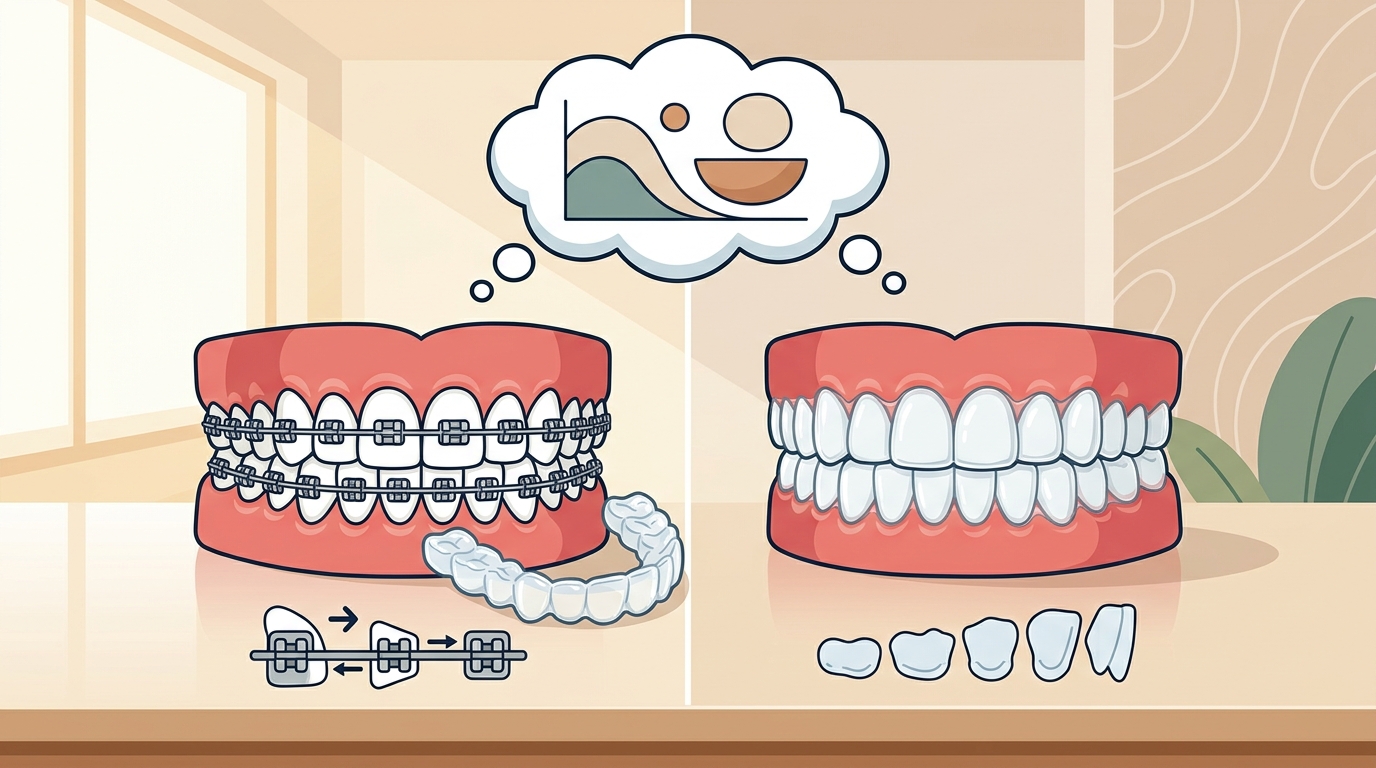
The fundamental difference between these two treatments lies in their mechanism of action. Traditional braces utilize metal brackets bonded directly to the tooth surface, connected by a wire that exerts continuous pressure to shift teeth. This method is often described as the gold standard for complex orthodontic cases. The American Association of Orthodontists notes that fixed appliances provide precise control over tooth movement, particularly for severe rotations or vertical discrepancies.
Clear braces, often referred to as clear aligners, use a series of custom-made, transparent plastic trays. Each tray in the sequence applies targeted force to specific teeth, gradually moving them into the desired position. While highly effective for mild to moderate alignment issues, the efficacy of clear aligners depends heavily on patient compliance. Healthline reports that clear aligners require wearing the trays for 20 to 22 hours per day to achieve predictable results. If the trays are removed for extended periods, the treatment timeline can extend significantly, or the teeth may not reach their intended final position.
For patients with complex bite issues, such as severe overbites or underbites, traditional braces often offer a more robust solution. The fixed nature of the appliance ensures that the orthodontist can make adjustments at every visit without relying on the patient to change their own trays. This level of control is crucial for achieving optimal occlusion and long-term dental stability.
Aesthetic Considerations and Social Impact
Aesthetics is the primary driver for many patients choosing clear aligners. The transparency of the trays makes them nearly invisible when worn, allowing for a discreet orthodontic journey. This is particularly beneficial for adults and teenagers who may feel self-conscious about wearing metal braces in social or professional settings. WebMD highlights that the psychological comfort of wearing less visible appliances can reduce social anxiety during treatment.
Traditional braces have evolved significantly in terms of appearance. Options such as ceramic brackets, which match the color of the teeth, and lingual braces, which are placed behind the teeth, offer more aesthetic alternatives to traditional metal braces. However, even ceramic brackets are more noticeable than clear aligners. For individuals who prioritize a completely invisible treatment process, clear aligners remain the superior choice.
It is important to note that "clear braces" is a marketing term. The trays are not perfectly invisible, especially up close. However, the difference in visibility is substantial enough to impact patient confidence. At Mindful Dentistry Boulder, we discuss these aesthetic nuances during your initial consultation to ensure your expectations align with the reality of the treatment.
Lifestyle Impact and Maintenance
Lifestyle compatibility is a critical factor in choosing between these two orthodontic modalities. Clear aligners are removable, which offers significant advantages in terms of oral hygiene and dietary freedom. Patients can brush and floss their teeth normally, reducing the risk of plaque buildup and decalcification, which are common concerns with fixed braces. Mayo Clinic emphasizes that maintaining good oral hygiene during orthodontic treatment is essential to prevent gum disease and enamel damage.
With traditional braces, dietary restrictions are strict. Patients must avoid hard, sticky, or chewy foods that can damage the brackets or wires. This can impact social dining experiences and require careful planning. Clear aligners allow patients to eat whatever they choose, provided they remove the trays first. This flexibility is a major lifestyle benefit for many adults and active teenagers.
However, the removability of clear aligners also introduces a risk of loss or damage. Patients must be disciplined about storing their trays in their protective cases and wearing them for the required duration. For individuals who struggle with routine adherence, traditional braces may be a more reliable option because they cannot be removed by the patient.
Cost Analysis and Insurance Factors
Cost is a significant consideration for most patients. Generally, traditional metal braces are less expensive than clear aligner systems. The average cost for traditional braces can range from $3,000 to $7,000, depending on the complexity of the case and the geographic location. Clear aligners, such as Invisalign, often range from $3,000 to $8,000. Forbes Health notes that the price difference can vary based on the provider and the specific treatment plan required.
Insurance coverage for orthodontic treatment varies widely. Many dental insurance plans offer a lifetime maximum for orthodontics, typically between $1,000 and $2,000. This coverage usually applies to both traditional braces and clear aligners, but it is essential to verify the specifics with your provider. Some insurance plans may have different co-pays or coverage limits for clear aligners due to their higher cost.
At Mindful Dentistry Boulder, we offer flexible payment plans to make orthodontic treatment accessible. We also work with major insurance providers to maximize your benefits. During your consultation, we will provide a detailed cost breakdown and help you understand your insurance coverage options.
Suitability Guide: Which Option Fits You?
Choosing the right treatment depends on your specific dental needs, lifestyle, and personal preferences. The following table summarizes the key differences to help you evaluate your options.
| Feature | Traditional Braces | Clear Aligners |
|---|---|---|
| Aesthetics | Visible metal brackets and wires | Nearly invisible transparent trays |
| Oral Hygiene | Requires special brushing and flossing tools | Normal brushing and flossing possible |
| Dietary Restrictions | Strict restrictions on hard and sticky foods | No restrictions when trays are removed |
| Compliance | Passive compliance (fixed appliance) | Active compliance (20-22 hours/day wear) |
| Treatment Duration | Often faster for complex cases | Variable, depends on compliance |
| Cost | Generally lower average cost | Generally higher average cost |
Key Takeaways
- Mechanical Precision: Traditional braces offer superior control for complex orthodontic cases, while clear aligners are best for mild to moderate alignment issues.
- Aesthetic Discretion: Clear aligners provide a nearly invisible treatment option, reducing social anxiety for adults and teenagers.
- Hygiene Benefits: Removable aligners allow for normal oral hygiene practices, reducing the risk of gum disease and enamel damage.
- Lifestyle Flexibility: Clear aligners permit unrestricted eating, while traditional braces require strict dietary modifications.
- Compliance Requirement: Success with clear aligners depends on wearing the trays for 20 to 22 hours daily, whereas braces are fixed and cannot be removed.
- Cost Variability: Traditional braces are often less expensive, but insurance coverage and payment plans can make clear aligners accessible.
- Professional Guidance: A consultation with a mindful dentist is essential to determine the most effective treatment for your specific dental anatomy.
Frequently Asked Questions
Are clear braces as effective as traditional braces?
Clear braces are highly effective for mild to moderate alignment issues. However, for complex cases involving severe rotations or bite corrections, traditional braces may offer better results due to their precise mechanical control.
How long does treatment take with clear aligners?
Treatment duration varies based on the complexity of the case and patient compliance. On average, clear aligner treatment can take anywhere from 6 to 18 months. Traditional braces may take a similar amount of time, but can sometimes be faster for complex cases.
Do clear aligners hurt less than braces?
Many patients report that clear aligners cause less discomfort than traditional braces. While both treatments involve pressure to move teeth, the smooth plastic of aligners does not irritate the cheeks and gums like metal brackets and wires can.
Can I eat with traditional braces?
You can eat with traditional braces, but you must avoid hard, sticky, and chewy foods that can damage the brackets. With clear aligners, you can eat whatever you like as long as you remove the trays first.
Is Invisalign covered by insurance?
Many dental insurance plans cover orthodontic treatment, including clear aligners, up to a lifetime maximum. It is important to check your specific policy details to understand your coverage limits and co-pays.
What is the average cost of clear braces?
The average cost of clear braces typically ranges from $3,000 to $8,000. This cost can vary based on the provider, the complexity of the case, and the specific brand of aligners used.
How do I maintain oral hygiene with clear aligners?
Maintaining oral hygiene with clear aligners is straightforward. You should brush and floss your teeth before reinserting the trays to prevent plaque buildup. You should also clean the aligners regularly with a soft brush and mild soap.
Schedule Your Consultation
Choosing between clear braces and traditional braces is a personal decision that requires professional guidance. At Mindful Dentistry Boulder, we are dedicated to providing mindful, patient-centered care. We will evaluate your dental needs, discuss your aesthetic preferences, and help you choose the treatment that best fits your lifestyle. Contact us today to schedule your consultation and take the first step toward a healthier, more confident smile.