
Sleep apnea affects millions of adults worldwide, yet the gold standard treatment, Continuous Positive Airway Pressure (CPAP), often faces significant adherence barriers. According to the American Academy of Sleep Medicine, CPAP compliance rates hover around 50% to 70%, leaving a substantial portion of patients seeking alternative solutions. This gap in adherence has driven a surge in interest toward non-CPAP interventions that offer comfort, discretion, and holistic care. At Mindful Dentistry in Boulder, we evaluate these options not just by their mechanical efficacy, but by their alignment with your body's natural physiology and your long-term health goals.
Understanding Sleep Apnea and CPAP Limitations
Obstructive Sleep Apnea (OSA) occurs when the throat muscles relax excessively during sleep, blocking the airway. This blockage causes breathing to stop and start repeatedly, leading to fragmented sleep and reduced oxygen levels. While CPAP machines are highly effective at keeping the airway open by delivering pressurized air, they are not without drawbacks. Many patients report issues with mask leaks, skin irritation, nasal congestion, and the general inconvenience of tubing.
For those who cannot tolerate CPAP, or who prefer a more natural approach, non-CPAP treatments have become increasingly viable. These alternatives range from custom-fitted dental devices to surgical corrections and lifestyle modifications. The choice depends heavily on the severity of your apnea, the anatomical structure of your airway, and your personal comfort preferences. Understanding these variables is the first step toward finding a sustainable solution.
Oral Appliance Therapy: The Primary Alternative
Oral Appliance Therapy (OAT) is widely recognized as the most common non-CPAP treatment for mild to moderate obstructive sleep apnea. This approach involves wearing a custom-fitted device in the mouth during sleep to reposition the jaw and tongue, thereby keeping the airway open.
How It Works
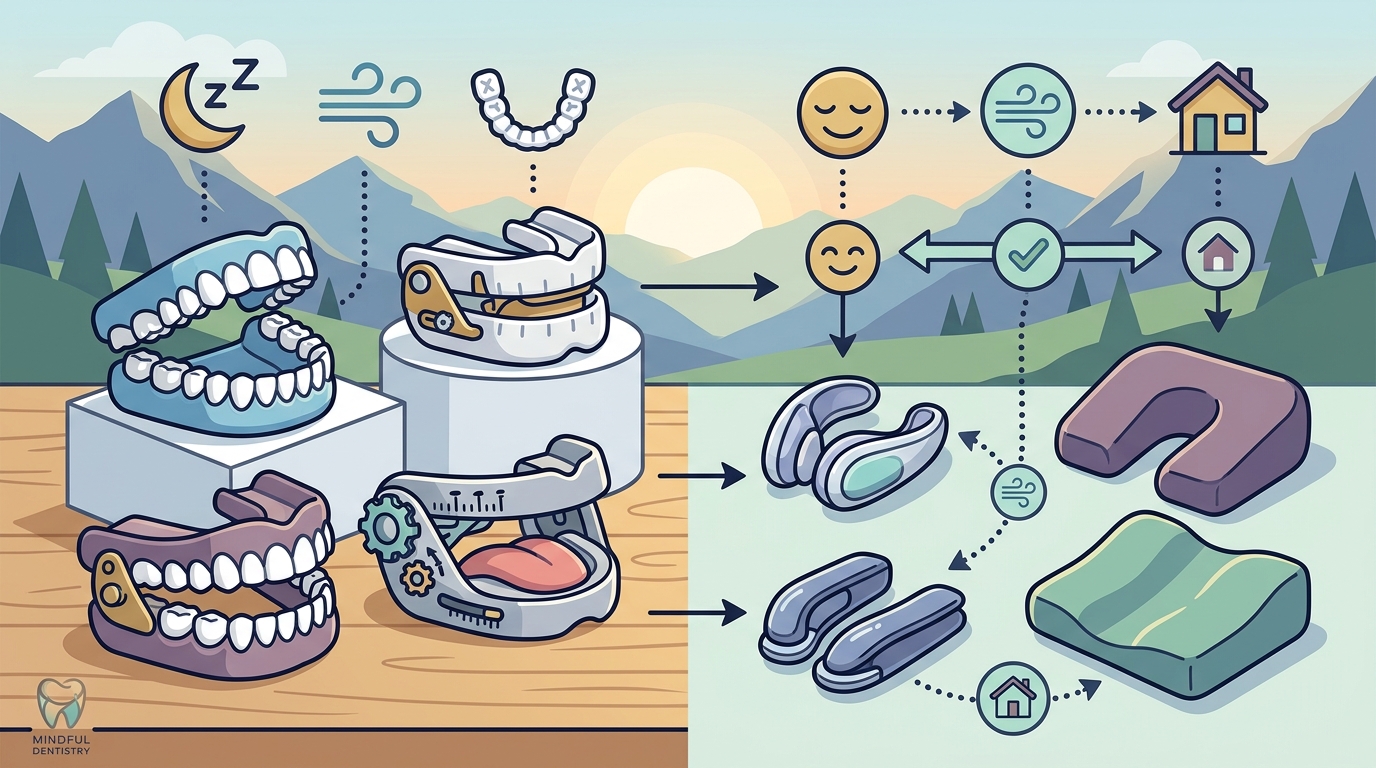
Oral appliances are typically mandibular advancement devices. They work by gently pushing the lower jaw forward, which in turn pulls the tongue and soft tissues away from the back of the throat. This mechanical adjustment prevents the collapse of the airway without the need for external pressure or masks.
Benefits of Custom Dental Devices
Unlike over-the-counter "boil-and-bite" mouthguards, custom oral appliances are fabricated from precise impressions of your teeth. This ensures a perfect fit, maximizing efficacy while minimizing jaw strain or discomfort. At Mindful Dentistry, we prioritize biocompatible materials and precise engineering to ensure your device supports your oral health alongside your sleep health.
Who Is a Candidate?
OAT is generally recommended for patients with mild to moderate OSA. However, it can also be effective for severe cases when used in conjunction with other therapies. Candidates must have a sufficient number of healthy teeth to support the device. If you are struggling with dental anxiety or simply dislike the idea of wearing a mask, OAT offers a discreet and comfortable alternative.
Surgical Interventions for Structural Issues
When oral appliances are not suitable or effective, surgical options may be considered. These procedures aim to physically remove or tighten the tissues that block the airway. Surgery is typically reserved for patients with specific anatomical abnormalities.
Common Surgical Procedures
One common procedure is UPPP (Uvulopalatopharyngoplasty), which removes excess tissue from the throat. Another option is hypoglossal nerve stimulation, where an implanted device stimulates the nerve that controls tongue movement, keeping the airway open during sleep. These interventions require a thorough evaluation by an ENT specialist and a sleep physician.
Risks and Recovery
Surgery carries inherent risks, including pain, bleeding, and infection. Recovery times vary, and success rates are not guaranteed for all patients. It is crucial to weigh these risks against the potential benefits. For many, less invasive options like custom night guards or oral appliances provide a safer first line of defense.
Lifestyle and Holistic Management Strategies
Holistic dentistry emphasizes the connection between oral health and overall systemic wellness. While lifestyle changes alone may not cure severe sleep apnea, they can significantly reduce symptoms and improve the efficacy of other treatments.
Weight Management and Sleep Position
Excess weight, particularly around the neck, can put pressure on the airway. Even a modest reduction in weight can alleviate symptoms. Additionally, sleeping on your side rather than your back can prevent the tongue from falling back and blocking the airway. Positional therapy devices can help maintain this side-sleeping posture.
Reducing Alcohol and Sedatives
Alcohol and sedative medications relax the throat muscles, worsening airway collapse. Avoiding these substances, especially within four hours of bedtime, can help maintain airway tone during sleep. This is a simple yet powerful step in managing sleep health holistically.
Comparing Treatment Modalities
Choosing the right treatment requires a clear understanding of how each option compares in terms of efficacy, comfort, and invasiveness. The table below summarizes the key differences between CPAP, Oral Appliance Therapy, and Surgical Options.
| Treatment Type | Efficacy for Moderate/Severe OSA | Comfort & Adherence | Invasiveness | Best For |
|---|---|---|---|---|
| CPAP Therapy | High (Gold Standard) | Low to Moderate (Mask Issues) | Non-Invasive (Mechanical) | Severe OSA, Immediate Relief |
| Oral Appliances | Moderate to High | High (Discreet & Comfortable) | Minimally Invasive | Mild to Moderate OSA, CPAP Intolerance |
| Surgery | Variable | Moderate (Recovery Period) | Invasive | Anatomical Abnormalities, Failed Conservative Therapy |
| Lifestyle Changes | Low to Moderate (Adjunctive) | High (Natural) | Non-Invasive | Mild OSA, Weight Management, Overall Health |
As shown, oral appliances offer a compelling balance of efficacy and comfort, making them a preferred choice for many Boulder residents seeking a holistic approach to sleep apnea.
Key Takeaways
- CPAP Adherence is a Major Challenge: Many patients struggle with long-term CPAP use due to discomfort, creating a need for effective alternatives.
- Oral Appliances are Highly Effective: Custom-fitted mandibular advancement devices are a proven, comfortable alternative for mild to moderate sleep apnea.
- Holistic Care Matters: Integrating dental health with sleep health ensures that treatments support overall well-being, not just symptom relief.
- Surgery is Not First-Line: Invasive procedures are typically reserved for specific anatomical issues or when conservative treatments fail.
- Lifestyle Impacts Sleep: Weight management, sleep position, and avoiding alcohol can significantly reduce apnea severity.
- Customization is Key: Over-the-counter devices rarely match the efficacy and comfort of professionally fitted oral appliances.
- Professional Evaluation is Essential: A sleep study and dental examination are required to determine the most appropriate treatment plan.
Frequently Asked Questions
Can oral appliances cure sleep apnea?
Oral appliances do not "cure" sleep apnea in the sense of eliminating the underlying condition permanently. However, they are highly effective at managing symptoms by keeping the airway open during sleep. For many patients, this provides a permanent solution to the nightly struggle of breathing.
Are oral appliances safe for long-term use?
Yes, when properly fitted and monitored by a dentist. Custom oral appliances are designed to be durable and safe for nightly use. Regular check-ups ensure that your bite and jaw alignment remain healthy over time.
How do I know if I am a candidate for non-CPAP treatment?
Candidates typically include those with mild to moderate sleep apnea, or those with severe apnea who cannot tolerate CPAP. A comprehensive evaluation, including a sleep study and dental exam, is necessary to determine suitability.
Do oral appliances work for severe sleep apnea?
While primarily designed for mild to moderate cases, some patients with severe apnea find relief with oral appliances, especially when used in conjunction with other therapies. Your dentist will assess your specific anatomy to make this determination.
What is the difference between a night guard and an oral appliance?
A night guard is primarily designed to protect teeth from grinding (bruxism). An oral appliance for sleep apnea is specifically engineered to advance the jaw and open the airway. While they may look similar, their functions and designs are distinct.
How long does it take to adjust to an oral appliance?
Most patients adjust within a few days to a week. Initial discomfort, such as excess saliva or jaw soreness, is common but typically subsides quickly. Your dentist will provide guidance on gradual adjustment periods.
Is holistic dentistry better for sleep apnea?
Holistic dentistry focuses on the connection between oral health and overall wellness. By using biocompatible materials and considering the whole body, holistic approaches often result in more comfortable and sustainable treatment outcomes.
Schedule Your Consultation
Finding the right sleep apnea treatment is a personal journey that requires expert guidance. At Mindful Dentistry in Boulder, we combine advanced dental technology with a holistic philosophy to create personalized treatment plans. Whether you are exploring clear aligners for other needs or seeking relief from sleep apnea, we are here to help. Contact us today to schedule your consultation and take the first step toward restful, healthy sleep.