

Laser Frenectomy: Precision and Minimal Bleeding
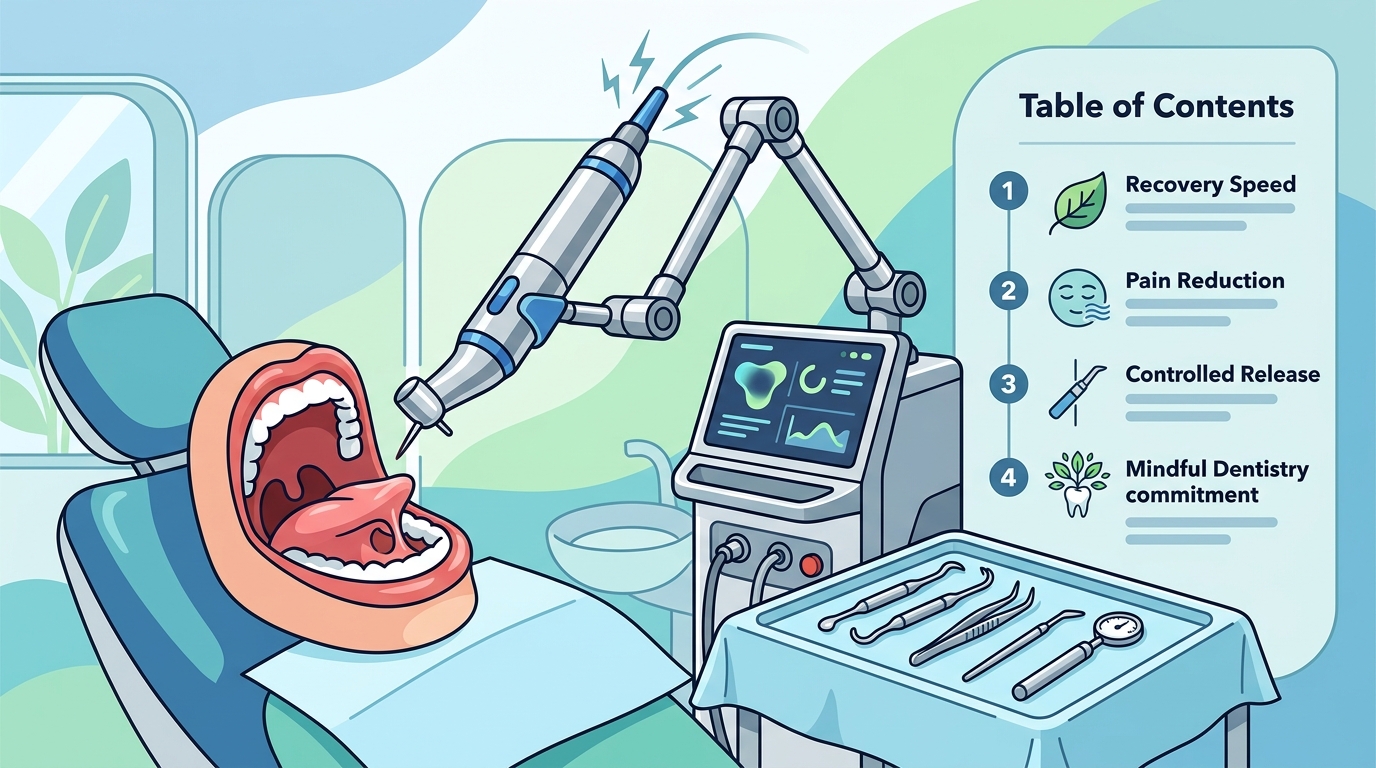
Healing is typically faster with laser treatment because the thermal effect creates a sterile wound bed. Patients often report less post-operative pain compared to traditional surgical methods. The laser also allows for a more controlled release of the frenum, which can be crucial for complex tongue-ties that extend deep into the floor of the mouth. At Mindful Dentistry, the use of laser technology aligns with our commitment to gentle, minimally invasive care. This method is ideal for patients seeking a quick recovery and minimal discomfort. For additional details, review the About.
Scalpel and Surgical Scissors: The Traditional Approach
The traditional surgical method involves the use of a scalpel or specialized surgical scissors to cut the frenum. This is the oldest technique and remains a valid option in many clinical settings. The procedure is straightforward and does not require expensive laser equipment. However, it typically involves more bleeding than the laser method. The dentist must use pressure, sutures, or electrocautery to control the bleeding after the cut is made.
Recovery from a scalpel frenectomy may take slightly longer than with laser treatment. The wound is an open cut that heals by secondary intention, meaning it closes from the edges inward. Patients may experience more swelling and discomfort in the first 24 to 48 hours. Despite these drawbacks, the scalpel method is highly effective and cost-efficient. It is often chosen when the tongue-tie is simple and superficial. Dr. Alesia Bergan and her team at Mindful Dentistry are trained in all standard techniques, ensuring that the chosen method aligns with the patient's specific anatomical needs and comfort level.
Needle-Knife Technique: A Hybrid Approach
Post-Operative Care and Healing Expectations
Regardless of the method used, post-operative care is critical for a successful tongue-tie release. The primary goal after the procedure is to prevent the tissue from re-attaching, a process known as re-tethering. Patients are typically prescribed a specific exercise regimen to stretch the newly released tissue. These exercises involve moving the tongue in various directions to maintain the range of motion gained during the surgery.
Healing timelines vary by method. Laser patients may resume normal activities within a day or two, while surgical patients might need a few days of soft food. Pain management is usually simple, involving over-the-counter pain relievers. Swelling is common but subsides quickly. At Mindful Dentistry, we provide detailed aftercare instructions and follow-up appointments to monitor healing. This ensures that the functional benefits of the frenectomy are fully realized. Proper care is essential to prevent complications and ensure long-term success.
Choosing the Right Method for Your Needs
Selecting the right frenectomy method depends on several factors, including the severity of the tongue-tie, the patient's age, and personal preferences. A posterior tongue-tie, which extends deep into the floor of the mouth, often requires a laser or needle-knife for safe and effective release. An anterior tongue-tie, which is more superficial, can often be treated with a scalpel or scissors. The dentist's expertise and the available technology in the practice also play a significant role in this decision.
Patients should discuss their concerns and goals with their provider during the consultation. Questions about bleeding, pain, and recovery time are important to address. At Mindful Dentistry, Dr. Alesia Bergan takes a holistic approach to this decision, considering the patient's overall health and comfort. We prioritize a gentle experience, ensuring that patients feel safe and informed throughout the process. The right method is the one that best fits the individual's anatomy and lifestyle.
Key Takeaways
- Scalpel and scissors methods are traditional, cost-effective, and effective for simple ties.
- Needle-knife techniques provide precision for complex or pediatric cases.
- Post-operative exercises are critical to prevent re-tethering of the tissue.
- Healing times vary, with laser patients typically recovering faster than surgical patients.
- Consultation with a qualified dentist is essential to determine the best method for your anatomy.
Frequently Asked Questions
Is a laser frenectomy more expensive than a scalpel frenectomy?
Yes, laser frenectomies are generally more expensive due to the cost of the equipment and technology. However, the faster healing and reduced need for follow-up care can offset some of these costs. Insurance coverage varies, so it is important to check with your provider.
Does a tongue-tie release hurt?
The procedure itself is performed under local anesthesia, so you will not feel pain during the cut. Post-operative discomfort is usually mild and manageable with over-the-counter pain relievers. Laser patients often report less pain than those who undergo surgical cuts.
How long does it take to heal from a frenectomy?
Healing typically takes one to two weeks. Laser patients may feel normal within a few days, while surgical patients might need a bit longer. Full functional recovery, including the ability to perform all tongue exercises, may take several weeks.
Can a tongue-tie re-attach after surgery?
Yes, re-tethering is a possible complication if post-operative exercises are not performed consistently. This is why adherence to the prescribed stretching regimen is crucial for long-term success.
Who should perform a tongue-tie release?
A qualified dentist, oral surgeon, or ENT specialist should perform the procedure. It is important to choose a provider with specific experience in frenectomy techniques and post-operative care.
Conclusion
Understanding the different frenectomy methods empowers patients to make informed decisions about their care. Whether choosing a laser, scalpel, or needle-knife technique, the goal is the same: to restore full tongue mobility and improve quality of life. At Mindful Dentistry in Boulder, we are committed to providing gentle, personalized care for every patient. If you are considering a tongue-tie release, we encourage you to schedule a consultation with Dr. Alesia Bergan to discuss your options. Contact Mindful Dentistry today to begin your journey toward better oral health and function.