
Sleep Apnea Treatment in Boulder Without CPAP
Obstructive sleep apnea affects millions of adults across the United States, yet traditional continuous positive airway pressure (CPAP) machines suffer from a compliance rate of less than 50 percent. Many patients abandon these devices due to discomfort, noise, and the feeling of confinement. Fortunately, Boulder offers advanced dental solutions that address the root cause of airway collapse rather than just managing symptoms. This guide explores how oral appliance therapy provides a viable, comfortable, and effective alternative for those seeking relief without the mask.
Understanding the Alternative to CPAP
Continuous positive airway pressure (CPAP) has long been the gold standard for treating sleep apnea. However, the device requires a patient to sleep with a mask strapped to their face, connected to a noisy machine. This setup often leads to skin irritation, dry mouth, and a sense of claustrophobia. According to the American Academy of Sleep Medicine, non-compliance with CPAP therapy is a major barrier to effective treatment. Many patients find the device disruptive to their sleep cycles and daily life.
Oral appliance therapy offers a different approach. It is a medical device worn in the mouth during sleep to keep the airway open. This method is particularly effective for mild to moderate obstructive sleep apnea. It also serves as a primary treatment for severe cases where CPAP is not tolerated. The goal is to reposition the jaw and tongue to prevent the soft tissues from collapsing. This mechanical adjustment allows for unobstructed breathing throughout the night.
At Mindful Dentistry Boulder, we prioritize patient comfort and long-term health. We understand that sleep is critical for overall well-being. Our approach focuses on finding a solution that fits seamlessly into your lifestyle. We do not believe in one-size-fits-all treatments. Instead, we tailor our interventions to your specific anatomical needs.
How Oral Appliances Work
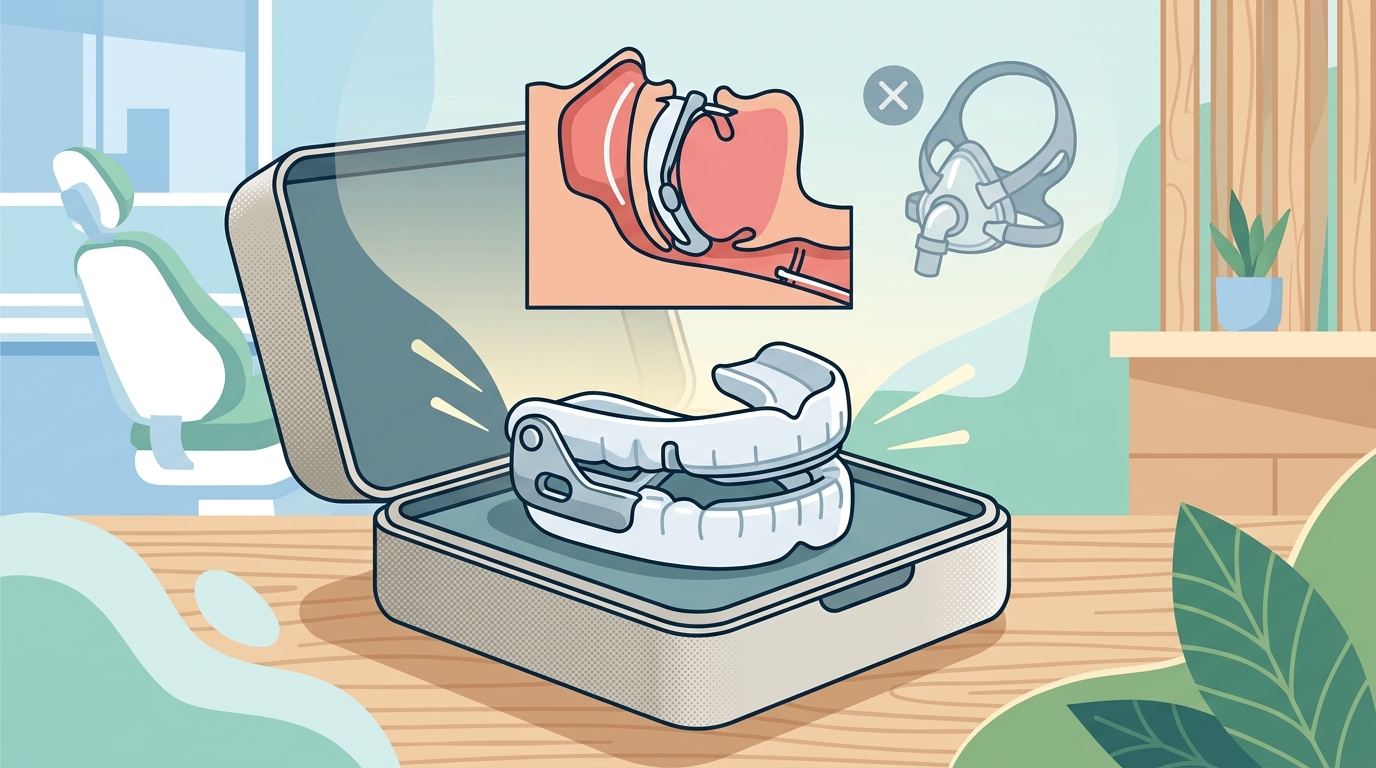
Oral appliances function by mechanically advancing the lower jaw. This forward movement pulls the tongue and associated soft tissues away from the back of the throat. The result is a wider airway that remains open during sleep. There are two main types of devices used in dental sleep medicine. The first is a mandibular advancement device (MAD). The second is a tongue-retaining device (TRD). MADs are the most common and are generally more comfortable for most patients.
Mandibular advancement devices are custom-fitted to ensure proper alignment and comfort. These devices are made from impressions of your teeth. This custom fit ensures that the device stays in place without causing excessive jaw strain. The material is durable yet flexible enough to allow for natural jaw movement. Many patients report that they forget they are wearing the device once they fall asleep.
Tongue-retaining devices work by holding the tongue in a forward position. This method is useful for patients who cannot tolerate jaw advancement. The device uses a small bulb to hold the tongue in place. This prevents the tongue from falling back and blocking the airway. While effective, TRDs are less commonly prescribed than MADs due to comfort preferences.
The effectiveness of these devices depends on the severity of the sleep apnea. For many patients, oral appliance therapy reduces the apnea-hypopnea index (AHI) to normal levels. This reduction leads to fewer awakenings and improved oxygen saturation. The result is a significant improvement in daytime energy and cognitive function.
Benefits of Dental Treatment
Choosing oral appliance therapy offers several distinct advantages over traditional CPAP. The most significant benefit is comfort. Patients often describe the experience as wearing a mouthguard rather than a medical device. There is no mask to leak air or cause skin irritation. The device is quiet, eliminating the noise that often disturbs a partner.
Portability is another major advantage. You can take your oral appliance anywhere you travel. There is no need to pack a bulky machine or find a power outlet. This freedom allows for consistent treatment regardless of your location. It also simplifies the routine of putting the device in and taking it out each night.
Long-term cost-effectiveness is also a factor. While the initial investment may be comparable to a CPAP machine, the ongoing costs are lower. There are no filters to replace or electricity to run. Maintenance involves simple cleaning and occasional adjustments. Over time, this can result in significant savings for the patient.
Furthermore, dental sleep medicine addresses the structural cause of the problem. CPAP acts as a pneumatic splint to keep the airway open. Oral appliances physically reposition the jaw to create space. This mechanical solution can lead to more natural breathing patterns. Many patients report feeling more rested upon waking. The improvement in sleep quality can positively impact mental health and physical performance.
The Diagnostic Process
Before starting any treatment, a thorough evaluation is necessary. This process begins with a comprehensive dental examination. We assess your oral health, jaw alignment, and tooth structure. The goal is to determine if you are a suitable candidate for oral appliance therapy. Certain dental conditions may require prior treatment before a device can be fitted.
A sleep study is typically required to confirm the diagnosis of sleep apnea. This study can be conducted in a laboratory or at home. The data collected helps determine the severity of the condition. It also provides a baseline to measure the effectiveness of the treatment. Without this data, it is impossible to tailor the device correctly.
Custom fabrication ensures the device fits your unique anatomy perfectly. Once the diagnosis is confirmed, we take precise impressions of your teeth. These impressions are sent to a specialized dental laboratory. The lab creates a device based on the specific prescription from your sleep specialist or dentist. This custom process is crucial for the device's efficacy and comfort.
Follow-up appointments are essential to monitor progress. We adjust the device to ensure optimal jaw positioning. These adjustments are made incrementally to avoid jaw pain or discomfort. Regular check-ins help ensure that the treatment continues to be effective over time. We also monitor your oral health to prevent any long-term side effects.
Comparison of Treatment Options
Understanding the differences between treatment options helps in making an informed decision. Below is a comparison of the primary methods for managing sleep apnea.
| Treatment Method | Comfort Level | Portability | Effectiveness for Mild/Moderate OSA | Primary Mechanism |
|---|---|---|---|---|
| Oral Appliance Therapy | High | Excellent | Very High | Jaw/Tongue Repositioning |
| CPAP Machine | Low to Moderate | Poor | High | Pneumatic Splinting |
| Surgery | Variable | N/A | Variable | Anatomical Correction |
| Positional Therapy | High | Moderate | Moderate | Gravity Manipulation |
Oral appliance therapy stands out for its balance of comfort and efficacy. It is particularly suitable for patients who have tried CPAP and found it intolerable. Surgery is an option but carries higher risks and a longer recovery time. Positional therapy is less invasive but may not be sufficient for severe cases. The choice depends on individual medical history and lifestyle preferences.
At Mindful Dentistry Boulder, we guide patients through this decision-making process. We provide clear information about the pros and cons of each option. Our goal is to help you find a solution that you can stick with long-term. Consistency is key to managing sleep apnea effectively.
Key Takeaways
- Oral appliance therapy is a proven alternative to CPAP for mild to moderate obstructive sleep apnea.
- Custom-fitted devices offer superior comfort and portability compared to traditional machines.
- Mandibular advancement devices work by physically repositioning the jaw to keep the airway open.
- A proper diagnosis via sleep study is essential before starting any treatment.
- Compliance with oral appliance therapy is significantly higher than with CPAP therapy.
- Regular follow-up adjustments ensure the device remains effective and comfortable over time.
- Mindful Dentistry Boulder provides personalized care for dental sleep medicine patients.
Frequently Asked Questions
Is oral appliance therapy covered by insurance?
Many dental insurance plans cover oral appliances for sleep apnea. Medical insurance may also provide coverage depending on the policy. It is best to check with your provider directly. We can assist with coding and documentation to support your claim.
Will the device cause jaw pain?
Some initial discomfort is common as your jaw adjusts to the new position. However, severe pain is not normal. We make incremental adjustments to minimize this sensation. Most patients adapt within a few weeks. If pain persists, we can modify the device to improve comfort.
How long does the oral appliance last?
With proper care, an oral appliance can last for several years. Regular dental check-ups help monitor the device's condition. We recommend replacing the device every three to five years to ensure optimal fit and function.
Can I wear the device if I have dentures?
Yes, oral appliances can be fabricated for patients with dentures. The design may vary slightly to accommodate the prosthetic teeth. We will assess your specific situation during the consultation to determine the best approach.
Do I need a referral from a doctor?
While a referral is not always mandatory, it is often required for insurance purposes. We work closely with sleep specialists to ensure coordinated care. Your dentist can help facilitate the necessary documentation and communication.
How quickly will I see results?
Many patients notice an improvement in sleep quality immediately. The reduction in snoring and apnea events can be observed by partners quickly. Full therapeutic benefits may take a few weeks as the device is fine-tuned.
Is the treatment reversible?
Yes, oral appliance therapy is non-invasive and reversible. You can stop using the device at any time. However, the underlying sleep apnea may return if the device is discontinued. Consistent use is recommended for ongoing health benefits.
Schedule Your Consultation
Take the first step toward better sleep and improved health. If you are struggling with sleep apnea and want to avoid CPAP, we are here to help. Our team at Mindful Dentistry Boulder specializes in dental sleep medicine. We provide compassionate, evidence-based care tailored to your needs.
Contact us today to schedule your consultation. We will evaluate your condition and discuss the best treatment options for you. Do not let sleep apnea control your life. Discover the freedom of restful sleep with a custom oral appliance. Visit our contact page to book your appointment now.