
Recent clinical data shows that over 43 million adults in the United States experience some form of sleep-disordered breathing, yet fewer than 20 percent receive a formal diagnosis. Sleep health experts emphasize that early oral cavity evaluation remains the most effective preventive measure. Airway-focused dentistry is a specialized clinical discipline that evaluates oral structure and breathing mechanics to prevent sleep-disordered breathing. Patients seeking care in the Boulder region benefit from practitioners who integrate craniofacial anatomy with respiratory physiology. This approach shifts treatment away from reactive symptom management and toward foundational structural optimization. Clinics in this mountain community prioritize non-invasive interventions that preserve natural dentition while restoring optimal breathing patterns during rest.
Understanding Airway-Focused Dentistry
Core Principles
Traditional dental care concentrates exclusively on tooth preservation and gum health. Airway-focused dentistry expands that scope to include the entire upper respiratory tract. Practitioners examine tongue posture, palate width, and jaw alignment to identify structural restrictions. These anatomical factors directly influence nighttime breathing efficiency. When the oral cavity lacks adequate volume, the airway narrows during sleep. This narrowing triggers compensatory muscle tension and fragmented rest cycles. Clinical research confirms that early structural intervention reduces long-term cardiovascular strain. (Experts at ADA)
Clinical Assessment
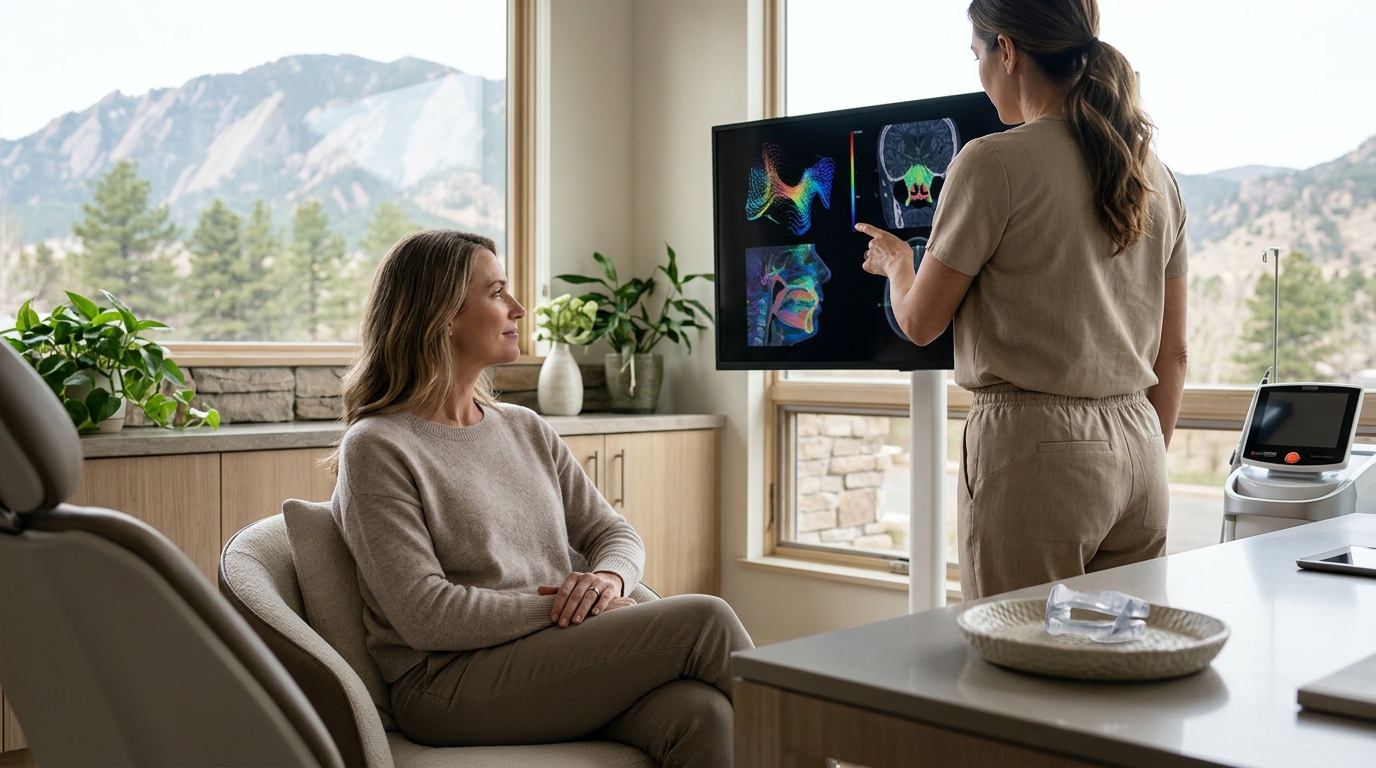
Comprehensive evaluations utilize advanced imaging and functional breathing tests. Dentists measure resting nasal airflow and track oxygen saturation levels throughout the day. They also assess swallowing mechanics and resting tongue position. These metrics establish a baseline for treatment planning. Patients receive detailed anatomical maps that highlight restrictive zones. The resulting data guides the selection of conservative therapeutic pathways. Dr. Alesia Bergan leads clinical assessments at the Boulder location, ensuring every patient receives a personalized structural analysis.
Recognizing Sleep Disordered Breathing
Common Symptoms
Many individuals dismiss chronic fatigue as a normal consequence of modern life. Persistent morning headaches, dry mouth upon waking, and unrefreshing sleep often signal underlying airway compromise. Loud snoring and witnessed breathing pauses represent advanced warning signs. Healthcare guidelines recommend immediate professional screening when these patterns persist beyond three months. Untreated breathing interruptions force the cardiovascular system to work overtime. This chronic stress accelerates arterial aging and increases metabolic risk.
Diagnostic Tools
Modern diagnostic protocols combine in-office monitoring with home sleep testing. Dentists utilize portable pulse oximeters and nasal airflow sensors to capture real-time data. They also conduct intraoral scans to model potential airway expansions. These tools eliminate guesswork and provide objective progress metrics. Patients track their own sleep quality alongside clinical measurements. The combined dataset reveals exactly where structural interventions will yield the highest return. Sleep medicine associations endorse this multi-modal diagnostic approach for accurate staging.
How Boulder Clinics Approach Airway Health
Holistic Evaluation
Practitioners in this region prioritize conservative, reversible treatments before considering invasive procedures. They focus on expanding the dental arch through guided orthodontic expansion. This process creates additional room for the tongue and reduces posterior airway resistance. Patients often experience immediate improvements in daytime energy and nasal breathing capacity. The clinic maintains a strict philosophy of preserving natural tooth structure whenever possible. Clear aligner therapy frequently serves as the primary expansion mechanism for adult patients.
Customized Therapies
When structural expansion alone does not resolve breathing interruptions, clinicians introduce targeted oral appliances. Obstructive sleep apnea is a chronic respiratory condition characterized by repeated upper airway collapse during sleep. Mandibular advancement devices are custom-fabricated oral appliances that reposition the lower jaw to maintain airway patency. These devices feature adjustable screws that allow gradual titration. Patients return for routine adjustments until optimal breathing metrics are achieved. The clinic also addresses concurrent bruxism through specialized night guards. Bruxism grinding treatment protocols ensure that airway devices do not trigger jaw tension.
Integrated Care Table
| Treatment Modality | Primary Mechanism | Typical Patient Profile | Expected Outcome Timeline |
|---|---|---|---|
| Palatal Expansion | Widens upper dental arch to increase nasal volume | Children and young adults with narrow palates | 3 to 6 months for structural adaptation (Effectiveness of the) |
| Mandibular Advancement Devices | Positions lower jaw forward to prevent tissue collapse | Mild to moderate sleep apnea patients | 1 to 3 months for symptom resolution |
| Clear Aligner Therapy | Gradually repositions teeth while supporting tongue posture | Adults seeking cosmetic and functional improvement | 6 to 18 months depending on complexity |
| Integrated Sleep Appliance | Combines jaw positioning with bruxism protection | Patients with concurrent grinding and breathing issues | 2 to 4 months for full titration |
Integrating Dental and Respiratory Care
Collaborative Models
Successful airway management requires seamless communication between dental providers and sleep physicians. Dentists share intraoral scans and functional breathing data with pulmonologists. Sleep specialists return polysomnography reports and continuous positive airway pressure prescriptions. This bidirectional exchange prevents conflicting treatment recommendations. Patients benefit from a unified care plan that addresses both structural and physiological factors. The clinic maintains active referral networks with local sleep centers. Educational blog resources keep patients informed about the latest collaborative protocols.
Long-Term Monitoring
Airway health requires consistent tracking rather than one-time interventions. Clinics schedule quarterly check-ins to verify appliance fit and breathing metrics. They update digital models whenever dental arches shift over time. Patients receive clear instructions on cleaning protocols and device storage. Regular monitoring prevents minor adjustments from becoming major complications. The clinic emphasizes that airway optimization is a lifelong commitment to respiratory efficiency. Dental implant services integrate seamlessly with airway expansion when bone volume requires surgical support.
Choosing the Right Provider in Colorado
Credentials to Verify
Prospective patients should verify board certification and specialized airway training. Look for practitioners who complete accredited courses in craniofacial anatomy and sleep medicine. Membership in professional airway organizations indicates ongoing education commitment. Clinics should openly share their diagnostic methodology and treatment success rates. Transparency regarding appliance materials and warranty coverage remains essential. Contact the Boulder office directly to request a comprehensive provider portfolio.
Patient Experience
Comfort and anxiety management play a critical role in successful airway treatment. Many patients experience significant dental anxiety when facing sleep-related procedures. Clinics that prioritize gentle sedation and transparent communication consistently report higher compliance rates. Staff members explain every diagnostic step before proceeding. Patients receive printed anatomical guides and digital progress dashboards. The clinic maintains a strictly anxiety-free environment through proven relaxation techniques. Dental anxiety relief protocols ensure that airway evaluations remain stress-free.
Key Takeaways
- Over 43 million adults experience sleep-disordered breathing, with fewer than 20 percent formally diagnosed.
- Airway-focused dentistry evaluates tongue posture, palate width, and jaw alignment to prevent nighttime breathing interruptions.
- Boulder clinics prioritize conservative expansion techniques before introducing invasive surgical interventions.
- Clear aligner therapy frequently serves as the primary expansion mechanism for adult patients seeking structural optimization.
- Collaborative care models require seamless data exchange between dental providers and sleep physicians.
- Regular quarterly monitoring prevents minor appliance adjustments from escalating into major complications.
- Verified credentials and accredited airway training remain the most reliable indicators of clinical competence.
Frequently Asked Questions
How do I know if I need airway-focused dental care?
Chronic morning fatigue, persistent dry mouth, and loud snoring consistently signal potential airway compromise. Dentists utilize portable oxygen sensors and intraoral scans to measure resting breathing efficiency. Patients who experience fragmented sleep despite adequate rest hours should schedule a comprehensive structural evaluation.
Can airway dentistry eliminate the need for CPAP machines?
Many patients successfully transition from continuous positive airway pressure therapy to custom oral appliances. Clinical success depends on the severity of anatomical restriction and consistent appliance wear. Dentists monitor oxygen saturation levels throughout the titration process to ensure safe transitions.
What qualifications should I verify before booking an appointment?
Prospective patients should confirm board certification, accredited airway training, and active membership in professional sleep organizations. Clinics must openly share diagnostic methodology and appliance warranty coverage. Dr. Alesia Bergan maintains extensive credentials in craniofacial expansion and sleep medicine.
How long does the initial airway evaluation take?
Comprehensive assessments typically require 60 to 90 minutes of focused clinical time. Practitioners conduct nasal airflow testing, intraoral scanning, and functional breathing analysis. Patients receive detailed anatomical maps and a customized treatment roadmap before leaving the office.
Are airway appliances comfortable for long-term nightly use?
Modern devices utilize medical-grade silicone and precision-milled acrylic to ensure extended comfort. Patients experience mild adjustment pressure during the first two weeks as tissues adapt. Clinics schedule routine follow-ups to fine-tune positioning and eliminate pressure points.
Does insurance typically cover airway-focused dental procedures?
Coverage varies significantly based on diagnostic coding and medical necessity documentation. Many providers successfully navigate prior authorization processes by submitting polysomnography reports. The clinic maintains dedicated billing specialists who maximize reimbursement for eligible airway interventions.
Schedule Your Airway Evaluation Today
Restoring optimal breathing mechanics requires proactive structural intervention rather than reactive symptom management. Patients in the Boulder region can access comprehensive airway assessments through a single clinical visit. The clinic combines advanced diagnostic imaging with conservative expansion techniques to preserve natural dentition. Contact the Boulder office directly to reserve your appointment and begin your personalized airway optimization journey. Early structural evaluation prevents long-term cardiovascular strain and restores restorative sleep cycles.